
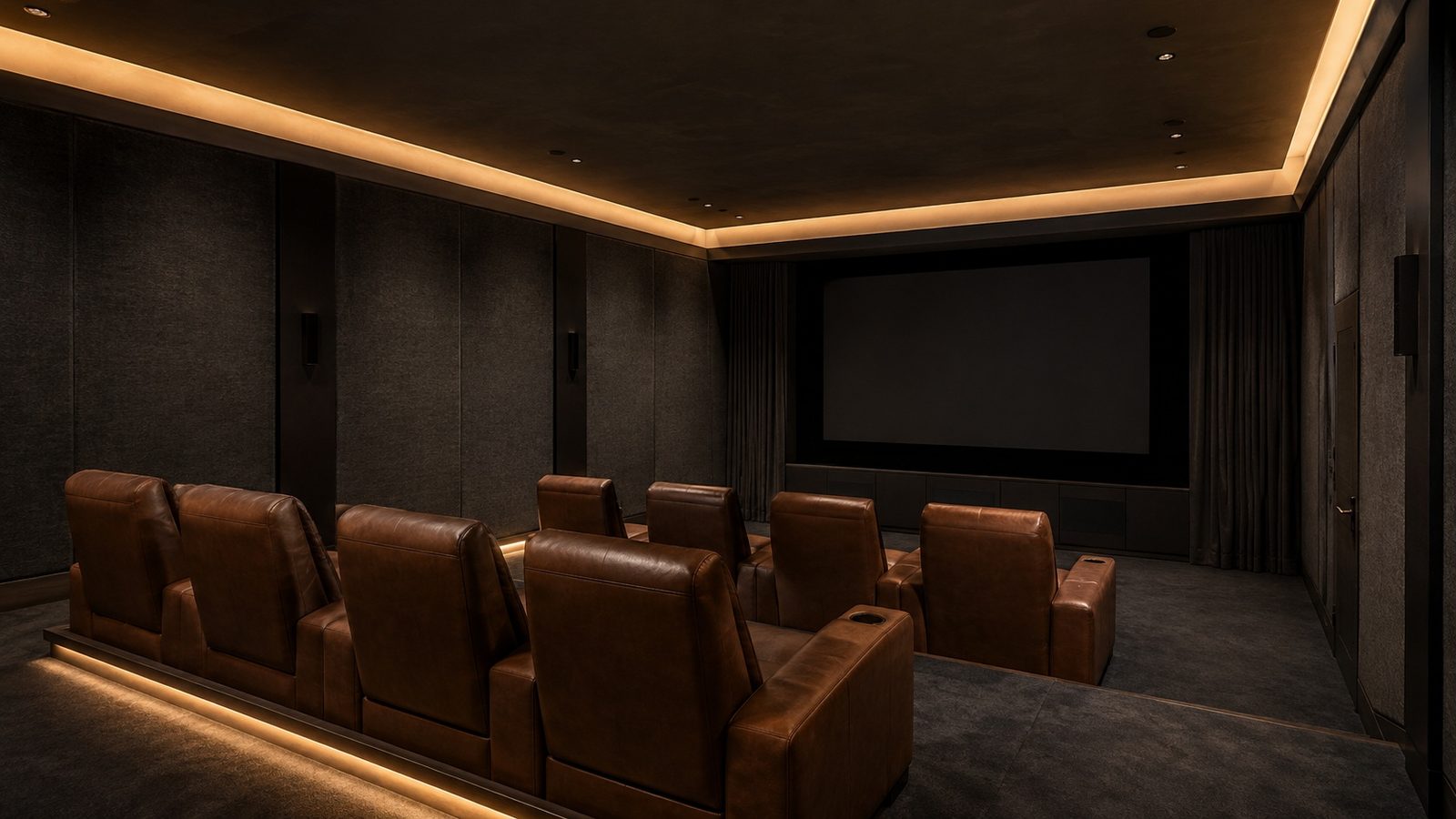
Some clients want a dark room with tiered seating and a projector. Others want a family room with a large screen in it that does not look like an electronics showroom. Remodeling Beverly Hills builds both across Beverly Hills.
In a town where a good number of clients watch screeners for a living, the room has to be right rather than impressive. Call (424) 766-1835 and we will start from the room you have.
Isolation before acoustics
Two different problems get confused constantly. Isolation is keeping sound inside the room. Acoustic treatment is making the sound inside the room behave. Treatment does nothing for isolation, and a room full of foam panels will still wake the house.
Isolation is built into the structure: a decoupled wall using isolation clips and hat channel, two layers of drywall with a constrained-layer damping compound between them, insulation in the cavity, an isolated ceiling, and a solid-core door with full seals. Anywhere the assembly is penetrated (an outlet, a duct, a light) is a leak, and low frequencies find every one of them.
This is why basements make the best theaters. Surrounding soil provides isolation on three or four sides at no cost, and there are no windows to treat.
Room geometry, which is decided before construction
Screen size and seating distance
Seating distance drives screen size, not the other way round. A common target is a viewing angle of roughly 36 to 40 degrees, which for a front row at 12 feet means a screen around 110 to 130 inches diagonal. Getting this wrong is the most common fault in expensive theaters. An oversized screen at close range is fatiguing rather than immersive.
Riser height and sightlines
A second row needs a riser, typically 8 to 12 inches, calculated so the rear viewers see over the heads in front to the bottom of the screen. The riser is framed and it is hollow, which makes it an excellent low-frequency resonator unless it is filled or braced. It also carries the power and low-voltage runs to the rear seats.
Speaker positions and the projector
Front three speakers behind an acoustically transparent screen where the room allows, surrounds at ear height beside and behind the seating, and subwoofers positioned where the room modes are least destructive rather than where they fit. The projector mount, lens throw and any ceiling structure to carry it get framed in before drywall.
Treatment, heat and light control
Inside the room, the first reflection points on side walls and ceiling get absorption, the rear wall gets diffusion or absorption depending on depth, and bass traps go in the corners where low-frequency energy accumulates. Fabric-wrapped panels can be built into the wall assembly so they read as an upholstered wall rather than as equipment.
Equipment heat is the failure people meet a year later. A rack of amplifiers, a processor and streaming gear in a closed cabinet needs active ventilation: an intake, an exhaust, and a thermostatic fan. Without it, components throttle and fail early. We prefer the rack in an adjacent closet or hallway with a conduit path, which also removes fan noise from the room.
Light control means no light source in the viewer's field of view during playback, blackout on any window, dark low-reflectance surfaces around the screen, and step lighting at the riser on a separate low-level circuit.
Theater versus family media room
A dedicated theater optimises entirely for viewing: no windows, dark surfaces, fixed seating, controlled acoustics. It is the better experience and it is a single-purpose room, which on a Beverly Hills floor plan is a real cost in flexibility.
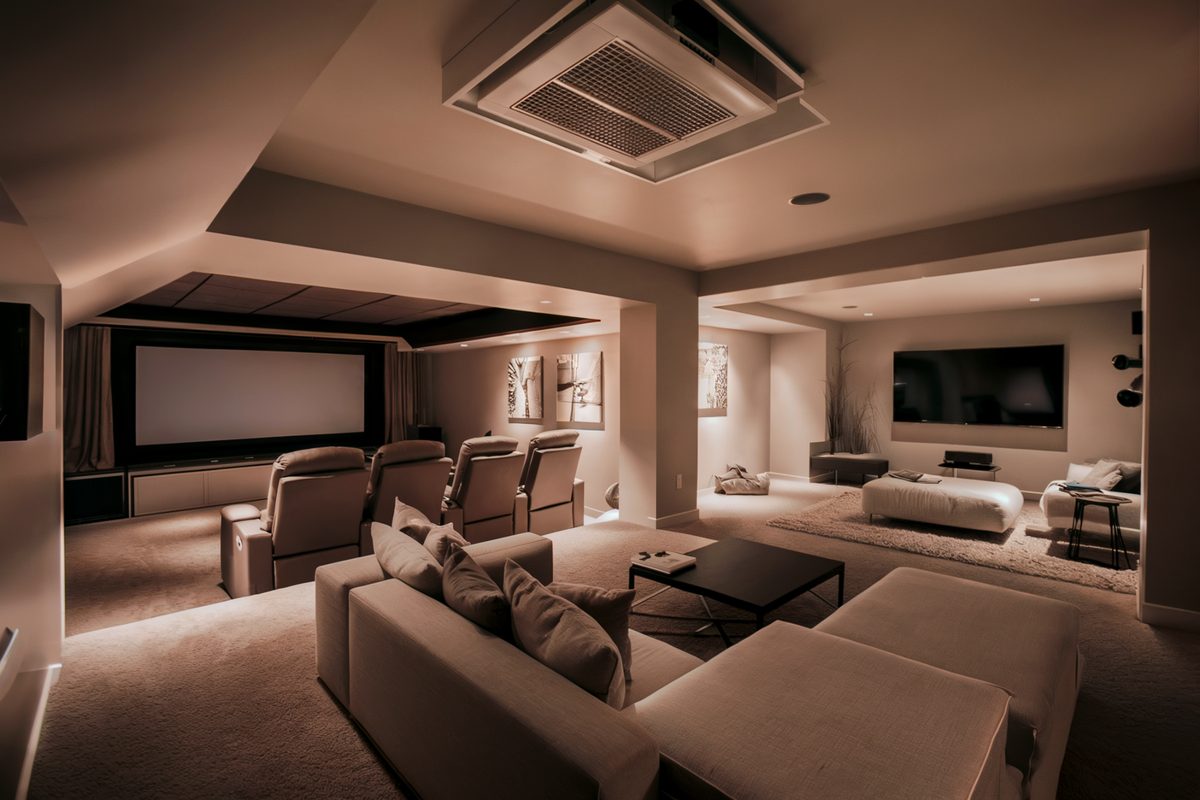
A family media room compromises deliberately: daylight, lighter finishes, a flat panel rather than a projector, and seating that faces the room as well as the screen. The build still matters: the wall behind the display needs blocking, conduit and power at the right height; the speakers still want to be in the right places; the room still benefits from some absorption on the ceiling.
Most Beverly Hills projects we are asked for are the second, and the ones that work best are the ones where the acoustic and electrical decisions were made at framing rather than after the furniture arrived.
Why we build the room before the equipment
Isolation first, acoustics second, gear last
A theatre that leaks into the bedroom above it is a room nobody uses after nine o'clock. Isolation is structural: decoupled walls and ceiling, mass, a sealed envelope, and a door that actually seals. It happens at framing and cannot be retrofitted from a catalogue. Acoustic treatment inside the room is the next layer, and it is a different problem with different materials. Most failed home theatres we see bought excellent equipment and skipped both.
The geometry is fixed in the drawings, not in the showroom
Screen size follows seating distance, riser height follows sightlines over the row in front, and speaker positions follow the seating, not the joinery. Those three decisions set the room dimensions, so they have to be made before framing rather than after the drywall is up. We draw the section with the seats and the sightlines on it, which also settles the argument about how many rows the room will genuinely take.
Heat, light and the rack, which is where these rooms fail in year two
A sealed, insulated room full of amplifiers needs dedicated cooling and a vented rack location, ideally outside the room so fan noise is not in your listening environment. Light control means a proper blackout layer, not a blind with a half-inch gap down each side. Built under CSLB #886079, with the low-voltage, electrical and HVAC coordinated under one contract instead of three subcontractors blaming each other.
What our clients say
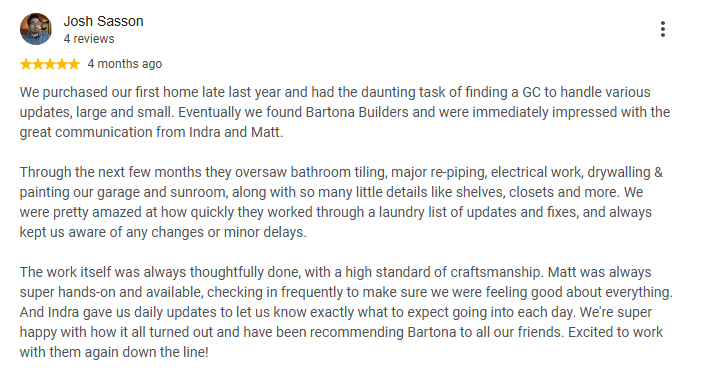
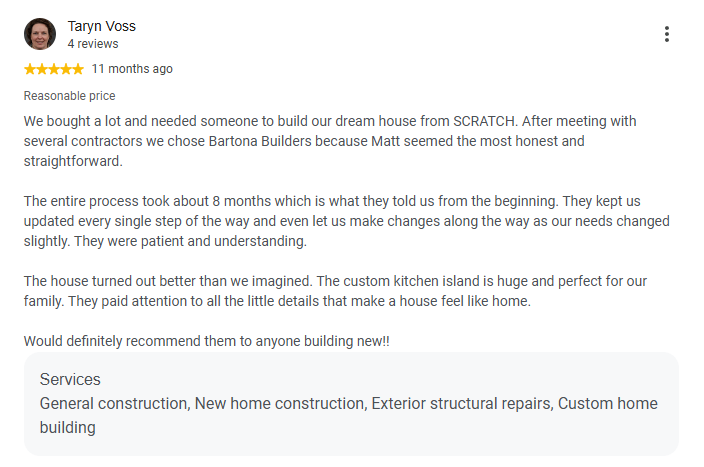
Reviews posted by homeowners we have built for, shown as screenshots exactly as they were written.
Talk to a Beverly Hills remodeling contractor
On-site estimate, straight answers on budget and schedule, and a written scope before anyone swings a hammer.
Call (424) 766-1835Frequently asked questions
How much does a home theater cost to build?
A dedicated theater with isolation, treatment, tiered seating and a projector typically runs $90,000 to $300,000 for construction, excluding electronics. A family media room built properly runs $40,000 to $110,000. Equipment is a separate budget and varies enormously.
Where is the best place in the house for a theater?
A basement, where the surrounding soil isolates three or four sides for free and there are no windows to blackout. Failing that, a room over a garage or at the end of the house, away from bedrooms.
Do I need a projector, or is a large TV enough?
For a dedicated dark room over about 110 inches of image, a projector still wins on scale and on cost per inch. For a room with daylight or a mixed-use family space, a large flat panel is brighter, simpler and needs less of the room designed around it.
Can you soundproof a theater in an existing room?
Yes, but real isolation requires opening the walls and ceiling to decouple them. Surface-applied treatment improves the sound inside the room without keeping it in. We will tell you plainly which of the two you are buying.
How long does a theater build take?
Twelve to twenty weeks for a dedicated room, including isolation construction, treatment and millwork. Seating and screen lead times can extend that, so those get ordered early.