
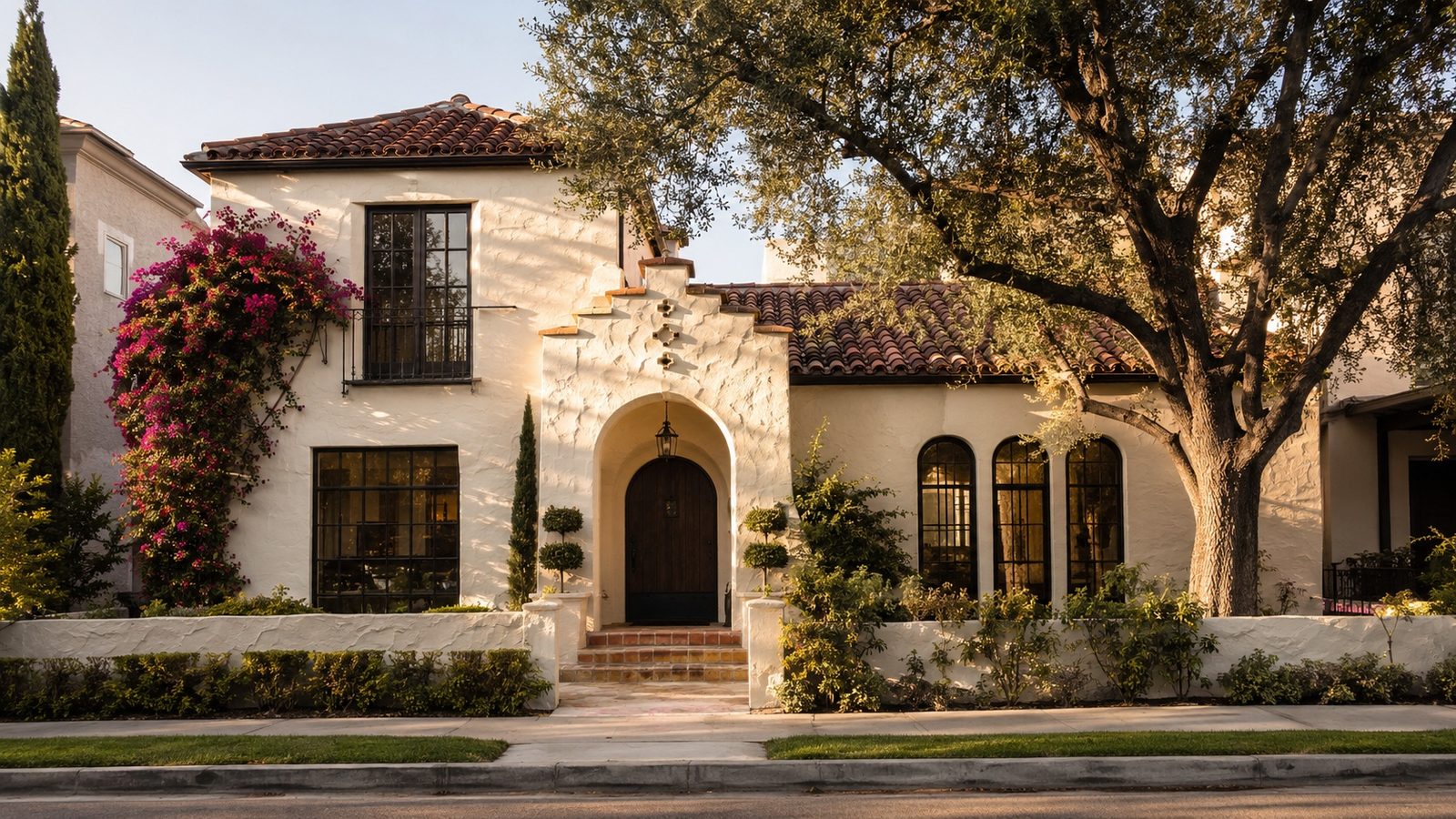
The 1920s and 1930s Spanish Colonial Revival and Mediterranean Revival houses that give the flats their character, along with the Tudor Revival, Monterey and pre-war traditional stock across the rest of the city. Remodeling Beverly Hills restores them.
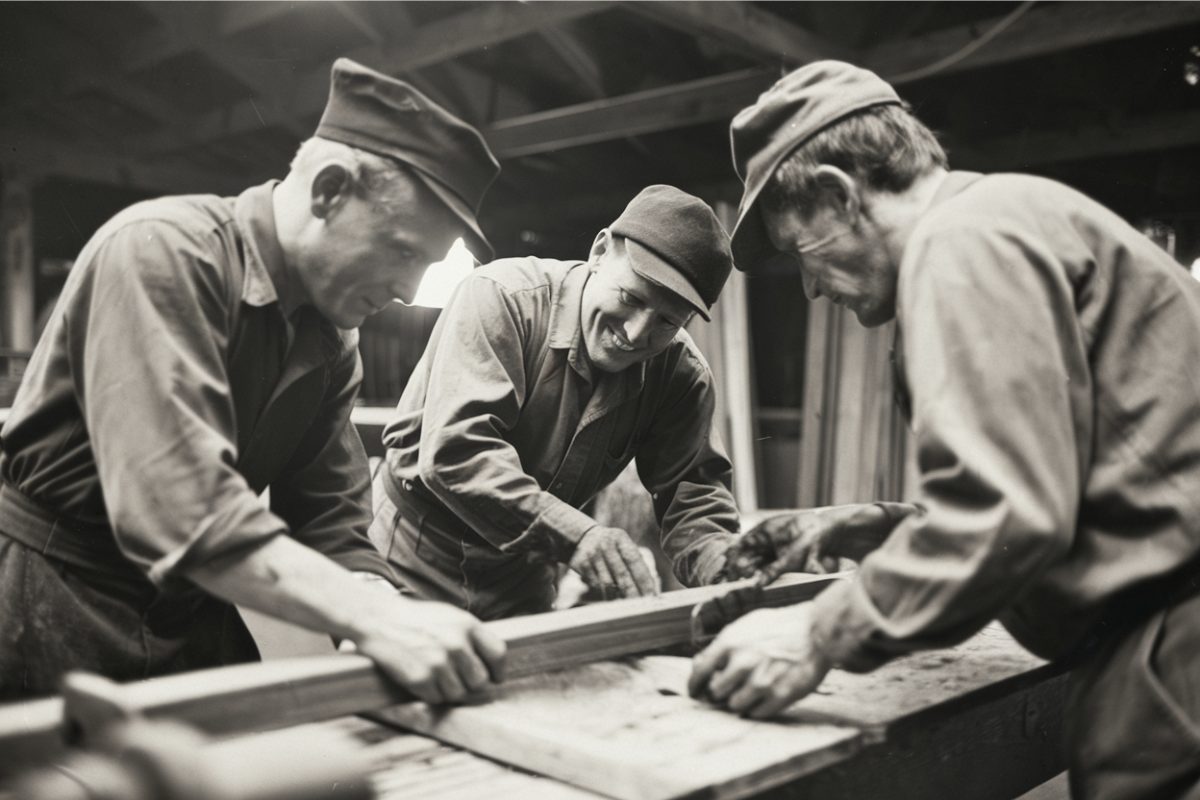
The company began as a family woodworking shop five generations ago, which is the reason this work sits well with us: most of what a period house needs is millwork, plaster and hand skills. Call (424) 766-1835 and we will look at what survives.
What is actually original, and what is worth keeping
Almost every pre-war Beverly Hills house has been remodelled two or three times, and the first job on any restoration is separating original fabric from later work. Original plaster, original steel casements, original clay tile, original hardwood and original millwork profiles are the elements that give the house its value and cannot be bought back once removed.
The 1970s and 1980s were unkind to these houses. Dropped ceilings over original coved plaster, aluminium sliders in steel casement openings, carpet over quarter-sawn oak, and smooth drywall over hand-troweled walls are the four we find most often, and all four are reversible.
We document before demolition: photographs, profile rubbings of every moulding, and salvage of tile, hardware and fixtures. A single original cast-bronze door set is worth more than the cost of the afternoon it takes to remove it carefully.
Matching the materials
Plaster
Original walls are three-coat plaster over wood or metal lath, and their surface is not flat in the way drywall is flat. Patching with drywall and a skim coat is visible under raking light for the life of the house. Correct repair means new lath, a scratch and brown coat, and a finish coat troweled to match the surrounding texture. It is slower and it is the difference between a restoration and a renovation.
Exterior stucco and tile
Period stucco is hand-troweled with a texture that machine application cannot reproduce. Clay roof tile from the 1920s is out of production, and matching it means salvage, which is part of why removing and stacking original tile during a re-roof matters so much. Two-piece mission tile and the S-profile clay used across Beverly Hills both have salvage markets.
Millwork and hardware
Baseboards, casings, crown, coved corners, arched openings and stair parts all have specific profiles that differ house to house. We run replacement profiles with custom knives to match the original instead of substituting a stock profile that is close. Hardware is restored, re-plated where necessary, or matched from period-correct suppliers.
Bringing systems up to standard without gutting the house
The systems in a 1928 house are all past end of life: knob-and-tube wiring, galvanised supply, cast iron waste, no insulation, and either no heating system or a converted gravity furnace. All of it gets replaced. The restoration question is how to do it without destroying the surfaces you are preserving.
The answer is routing. Running new plumbing and electrical through closets, chases, attic and crawlspace, stacking new bathrooms above or below existing ones, and opening plaster in planned, patchable strips rather than wherever is convenient. It takes longer and it costs more than a gut, and it is the entire point.
Insulation and energy performance is the compromise everyone negotiates. Blown-in cavity insulation is achievable from the attic or from small patched openings. Window performance is the hard one. Original single-glazed steel casements will never meet current standards, and the choices are restoration with interior storm panels, or replacement with thermally broken steel that matches the sightlines.
Historic status and review
Beverly Hills maintains a local register and a landmark designation process, and a designated property carries review requirements on exterior alterations. Most pre-war homes in the city are not individually designated, but design review still applies to street-visible changes on single-family properties generally.
Where a house is designated, or where an owner is pursuing designation, the standards applied are generally those of the Secretary of the Interior: repair rather than replace, match in kind where replacement is unavoidable, and make new work distinguishable from old on close inspection while compatible at a distance. Designation carries potential property tax benefits under the Mills Act in participating jurisdictions, which is worth investigating before assuming designation is only a constraint.
We prepare review packages and work to those standards whether or not a property is designated, because they are simply good practice on a house worth restoring.
Why period houses come to us
We work out what is original before anything is removed
A 1920s house in the flats has usually been remodelled three or four times, and the valuable fabric is mixed in with sixty years of well-meant replacement. We survey first and document what is original, what is a sympathetic later change and what is simply damage, then agree what is being kept. Once original plaster, tile or casement steel is in a skip it is gone, and matching it afterwards costs several times what protecting it would have.
Matching materials, which is a trade rather than a purchase
Three-coat lime plaster does not match to skim-coat gypsum, and a hand-troweled stucco finish cannot be matched by a crew who only spray. Clay tile needs sourcing by profile and colour blend, often reclaimed. Millwork gets profiled from an existing section and run to match, which is straightforward when there are five generations of carpenters behind the company and very difficult otherwise.
New systems without gutting the house
Rewiring, re-piping and adding mechanical to a period house is mostly a routing problem: using existing chases, closets and attic runs, working from below where the floor is coming up anyway, and accepting a slightly longer duct run to save an original ceiling. It is slower than opening every wall and it is the entire point. Built under CSLB #886079, and we would encourage you to check it.
What our clients say
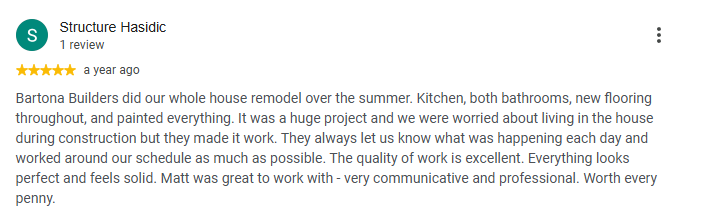
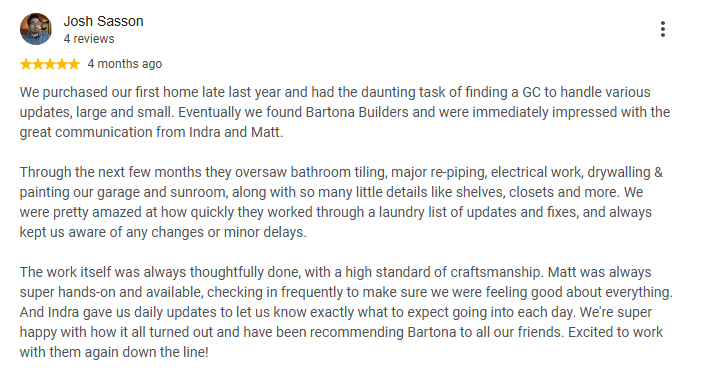
Reviews posted by homeowners we have built for, shown as screenshots exactly as they were written.
Talk to a Beverly Hills remodeling contractor
On-site estimate, straight answers on budget and schedule, and a written scope before anyone swings a hammer.
Call (424) 766-1835Frequently asked questions
How much does restoring a period home cost?
Restoration typically runs 20 to 40 percent above a comparable conventional remodel, because matched materials and hand methods take longer. A full restoration of a 1920s Beverly Hills home commonly runs $400 to $900 per square foot depending on how much original fabric survives and how much is being reproduced.
Can original steel casement windows be saved?
Usually yes. They can be stripped, de-rusted, re-glazed with new putty, fitted with weatherstripping and repainted, and interior storm panels can be added for thermal performance. It costs more than replacement and it preserves the single most defining element of a Spanish or Mediterranean Revival elevation.
Is my house historic?
Beverly Hills maintains a local register, and designation is a formal process rather than a function of age. Most pre-war homes are not designated. Street-visible exterior changes on single-family properties can still be subject to design review regardless of designation status.
Do I have to keep the original layout?
Not unless the property is designated and the interior is specifically covered, which is uncommon. Most restorations we do open the kitchen and rework the bathrooms while preserving the principal rooms, the entry sequence, the stair and the exterior. That is usually the balance owners want.
How long does a period restoration take?
Eight to eighteen months of construction, plus three to six months of design, documentation and permitting. Custom millwork profiles and salvaged material sourcing both add lead time that a conventional remodel does not carry.