
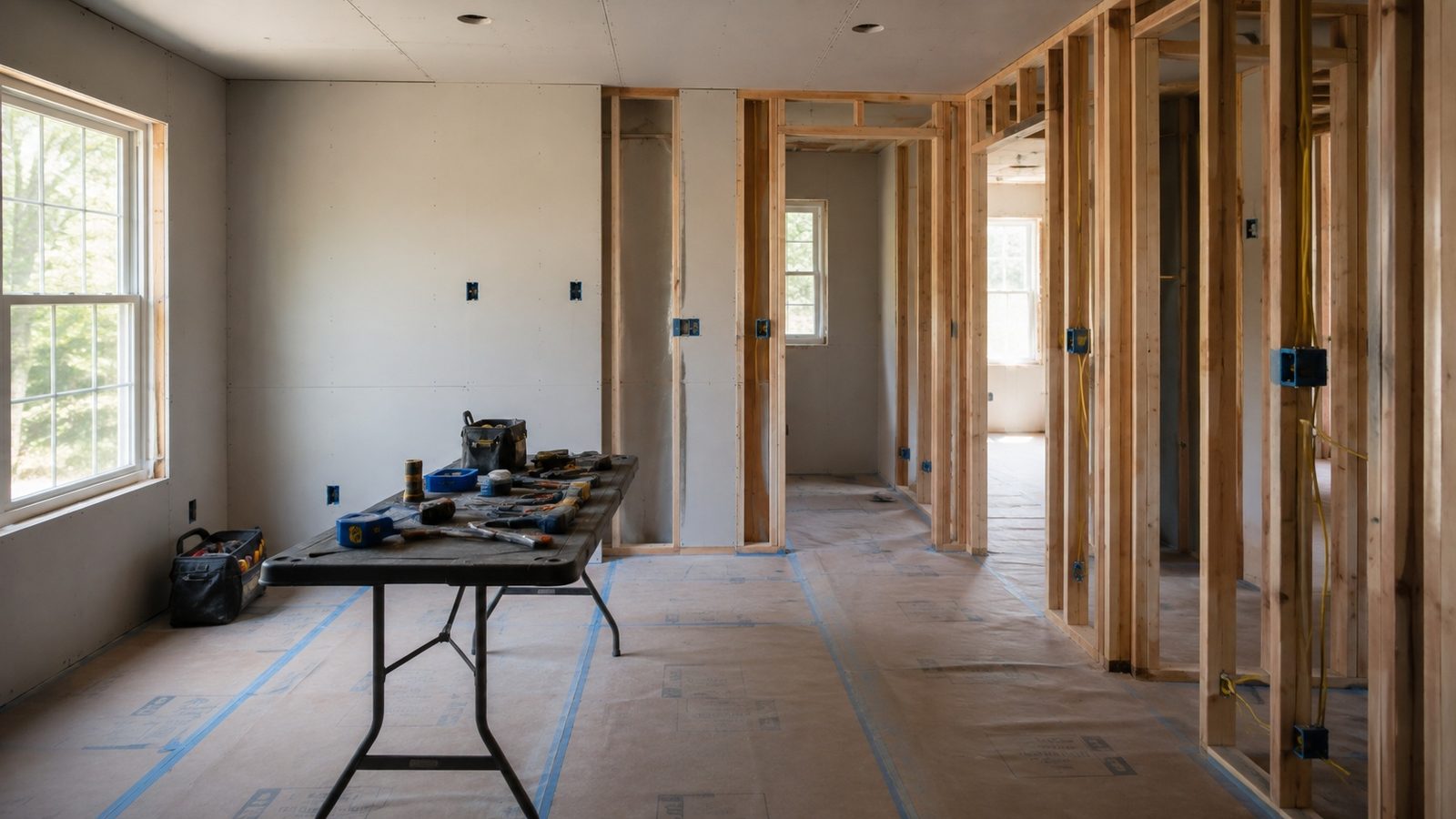
After a fire, a flood, a burst supply line or a roof failure there are two separate jobs. Emergency mitigation comes first. Reconstruction follows, and that second part is what Remodeling Beverly Hills handles.
We are a remodeling contractor instead of an emergency response service. If water is still running, shut the main and call a 24-hour mitigation company first. Once the property is stabilised, call (424) 766-1835 and we will scope the rebuild.
The two phases, and why the distinction matters to you
Restoration work splits into mitigation and reconstruction, and they are usually different companies with different economics.
Mitigation is the first 72 hours: water extraction, structural drying with air movers and dehumidifiers, board-up, tarping, soot and smoke containment, and removal of unsalvageable material. It is priced by the day and by the equipment, and it needs to happen immediately because mould becomes a factor within 24 to 48 hours of a water event.
Reconstruction is everything after: framing repair, drywall, mechanical and electrical replacement, cabinetry, flooring, finishes, and putting the house back together. It is a construction project, priced like one, and it is where the majority of the claim value sits.
Owners frequently accept the mitigation company's affiliated rebuild without comparing it. You are entitled to choose your own contractor for reconstruction, and on a large loss the difference in scope quality and finish level is substantial.
Working with the adjuster
The scope of loss is negotiable
The adjuster's estimate, usually produced in industry estimating software, is a starting position rather than a verdict. Line items get missed routinely: code upgrade requirements, matching of undamaged adjacent surfaces, contents handling, and the labour burden of working in an occupied or partially damaged structure. We prepare a line-by-line scope against theirs and document the differences with photographs.
Ordinance and law coverage
Most policies include coverage for the additional cost of rebuilding to current code rather than to the standard the house was originally built to. On an older Beverly Hills home this is significant. It can cover electrical service upgrades, seismic strapping, insulation and glazing standards that did not exist when the house was built. It is frequently under-claimed because owners do not know it is there.
Depreciation and recoverable holdback
Insurers typically pay actual cash value first and release the recoverable depreciation once the work is complete and invoiced. That means the initial cheque will be less than the cost to rebuild, by design. Knowing this ahead of time prevents the sinking feeling that the claim has been underpaid when it has not.
Fire, smoke and water each damage differently
Fire damage is the most visible and often the least complicated to scope, because what burned is obvious. What is not obvious is heat damage to structural members that did not char, and to wiring inside walls that was never touched by flame.
Smoke and soot travel far beyond the fire and behave differently depending on what burned: protein smoke from a kitchen fire, dry smoke from a fast hot fire, and wet smoke from a slow smouldering one each require different cleaning and sealing. Untreated soot residue continues to off-gas odour for years, and that is why sealing framing before closing walls is standard on any significant fire loss.
Water damage is graded by source and by how long it sat. Clean water from a supply line, grey water from an appliance, and black water from sewage or ground flooding carry escalating contamination and different removal requirements. Category and drying class determine what can be dried in place and what must be removed, and that determination should be documented with moisture readings rather than assumed.

Rebuilding after a wildfire loss
The January 2025 fires changed the rebuild landscape across the Westside, and Pacific Palisades in particular. The City of Los Angeles has issued thousands of permits since, average processing times have improved from the early months, and a pre-approved standard plan programme now offers architectural and engineering sets that already meet wildfire-resilient construction standards.
Building permit fees have been waived for fire-damaged properties where the owner held the property before January 7, 2025, and the streamlined rules and fee waivers run to a 2032 permit deadline. That is a meaningful sum on a full rebuild and it is worth confirming eligibility with the department early.
Rebuilding in a Very High Fire Hazard Severity Zone brings requirements that a pre-fire house did not have: Class A roof assemblies, ember-resistant vents, enclosed eaves, ignition-resistant exterior materials, multi-pane tempered glazing, and defensible space landscaping. We build to those standards as a matter of course in the fire zones, whether or not the property is a rebuild.
Why insurance rebuilds go better with us
The scope of loss is negotiable, and most owners do not know that
The adjuster's first estimate is an opening position built from a software line-item database, not a construction bid. Missing scope is normal at that stage: framing that only shows once you demolish, code upgrades triggered by the repair, the real cost of matching an existing finish. We document what the work actually requires, price it properly and supplement the claim. That conversation is where most of the money in an insurance rebuild is won or lost.
Ordinance and law coverage, and the code upgrades it pays for
Repairing a damaged house usually triggers current code on the parts you touch: electrical, egress, energy, sometimes structural. Standard dwelling coverage pays to put back what was there, not to upgrade it. Ordinance and law coverage is the part of your policy that closes that gap, and it is routinely left unclaimed because nobody itemised it. We identify it early, because on a serious loss it is a large number.
Mitigation and rebuild are two different jobs on two different clocks
Emergency mitigation stops the damage spreading and runs in days. The rebuild is a permitted construction project and runs in months, on a scope everyone has agreed. Confusing the two is how owners end up paying twice for the same demolition. We run the rebuild under one contract, licensed, bonded and insured under CSLB #886079, with certificates going directly to your carrier or association.
What our clients say
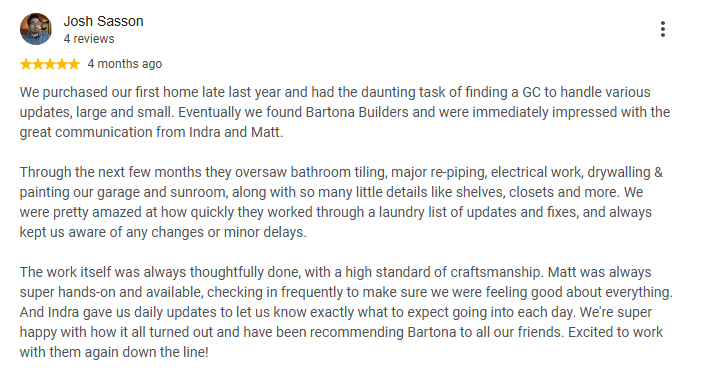
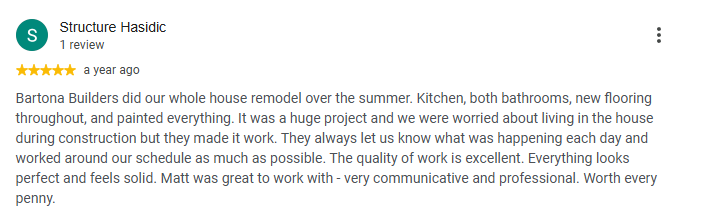
Reviews posted by homeowners we have built for, shown as screenshots exactly as they were written.
Talk to a Beverly Hills remodeling contractor
On-site estimate, straight answers on budget and schedule, and a written scope before anyone swings a hammer.
Call (424) 766-1835Frequently asked questions
Do I have to use the contractor my insurance company recommends?
No. You are entitled to choose your own contractor for reconstruction. Preferred-vendor programmes exist for the insurer's convenience and cost control, and on a large or high-finish loss the scope and finish quality are usually worth comparing before you sign.
Will you work directly with my adjuster?
Yes. We prepare a detailed line-item scope, meet the adjuster on site, document the differences with photographs and moisture readings, and negotiate supplements where the original estimate missed items. That process is part of the job, not an extra.
How soon can the rebuild start after a loss?
After mitigation is complete and the structure has been dried and verified, which is usually one to three weeks for a water event. Fire losses take longer because the structural assessment and soot remediation come first. Permits for structural repairs add time on top.
What is ordinance and law coverage?
It is the part of your policy that pays the additional cost of rebuilding to current code rather than to the original construction standard. On an older home it can cover electrical, seismic, insulation and glazing upgrades. It is one of the most under-claimed provisions in a residential policy.
Do you rebuild in the Palisades and other fire zones?
Yes. We build to Very High Fire Hazard Severity Zone standards: Class A roofing, ember-resistant venting, enclosed eaves and ignition-resistant cladding, and we can work from the City of Los Angeles pre-approved standard plans where they suit the site.